Korean Shabu-Shabu in a Room Built Like a Hot Spring
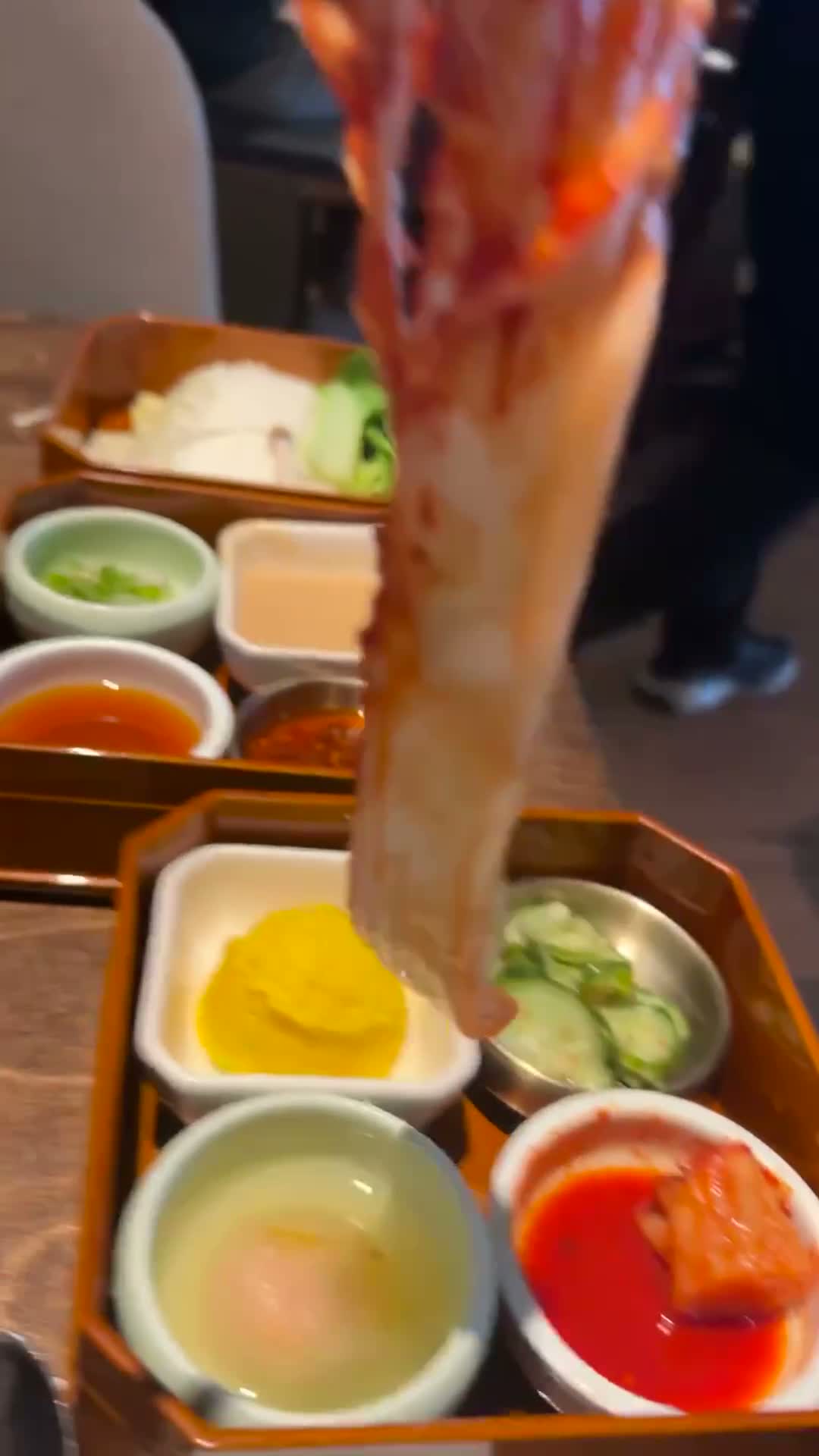
The shabu-shabu at Oncheon arrives in stacked wooden boxes: banchan on one level, vegetables and thinly sliced meat on others, a portion of freshly made kalguksu noodles on another, all set beside the pot that will do the cooking. The broth is the decision that matters. The signature is doenjang, built on the fermented soybean paste that gives so much Korean home cooking its savory backbone, and the other standard choice is a spicy version. The video filmed here shows the format in motion: broth poured over sliced beef and vegetables in a skillet, beef swirled through simmering soup, noodles lifted out on chopsticks, small dishes of sauce lined up alongside.
Oncheon is Korean for hot spring, and the restaurant keeps to the name. It comes from Glow Seoul, the South Korean hospitality group, which opened the original in Seoul's Iksun-dong district. The room on Fifth Avenue between 31st and 32nd Streets is its first in the United States. The cooking draws on hansik, Korean food rooted in tradition and seasonal ingredients, and it is applied to a format New Yorkers mostly know as all-you-can-eat. Oncheon is not all-you-can-eat, and the team has said it knows that means the service, the room and the quality of the meat have to carry the price.
What it adds to the neighborhood is a hot pot that expects to be finished, not conquered.
A Pot Meant to Nourish
The reasoning is borrowed from the baths. In Korea, oncheon soaking is a daily wellness practice, and the kitchen aims to leave people nourished rather than stuffed, so the toppings lean toward unprocessed ingredients, with fish cakes and noodles as optional extras. Past doenjang and spicy, the broths include a spicy curry and a porcini mushroom, and a porcini and kombu version for vegetarians. The Infatuation, in its review, called the Korean-style shabu-shabu rich and seemingly never-ending, and praised how beautifully it is presented.
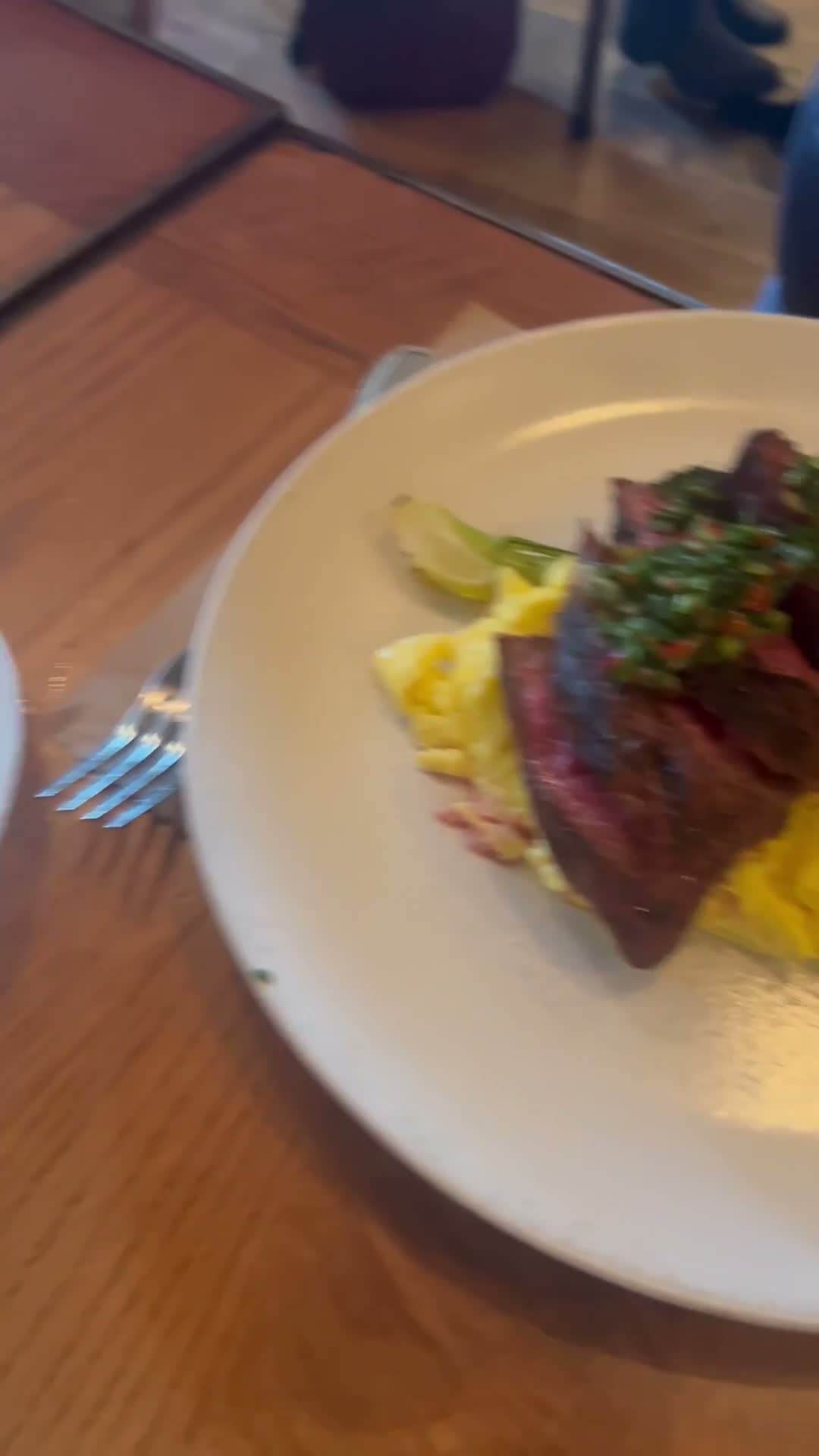
Lunch changes the format. The chanhap meal box is a layered arrangement of small dishes, among them bossam rolled kimchi and a yuzu lychee jelly to finish. The set meals put a protein over seasoned rice: grilled eel with tamago, or flat iron steak with a poached egg, mushrooms, roasted whole garlic and pickled ginger. Both come with banchan, miso soup and a drink. It is a calmer, quicker way into the same kitchen, and a plainer test of how the place handles a single bowl of rice.
A Spa Off Fifth Avenue
The room takes its cues from hanok inns, with pinewood finishes, moss accents and running water, as Cititour reported when it opened. The Infatuation described the more literal touches: a large TV screen in each booth playing snowy spa scenes, and a water feature covered in fake snow in the front window. Its critic judged that none of this fully transports you out of Koreatown, but still found the room relaxing, which is probably the fairer ambition. A hot spring theme on a Midtown block is a stage set, and the restaurant does not pretend otherwise. What it adds to the neighborhood is a hot pot that expects to be finished, not conquered.
What the critics say
The Infatuation called the Korean-style shabu-shabu rich and seemingly never-ending, and found the spa-like room relaxing even though it doesn't fully transport you out of Koreatown.
Cititour reported on the opening as the U.S. debut of Glow Seoul's Oncheon, a hansik-based menu in a hanok-inspired room of pinewood, moss and flowing water.