Korean Bar Food, Rewired for Restaurant Row
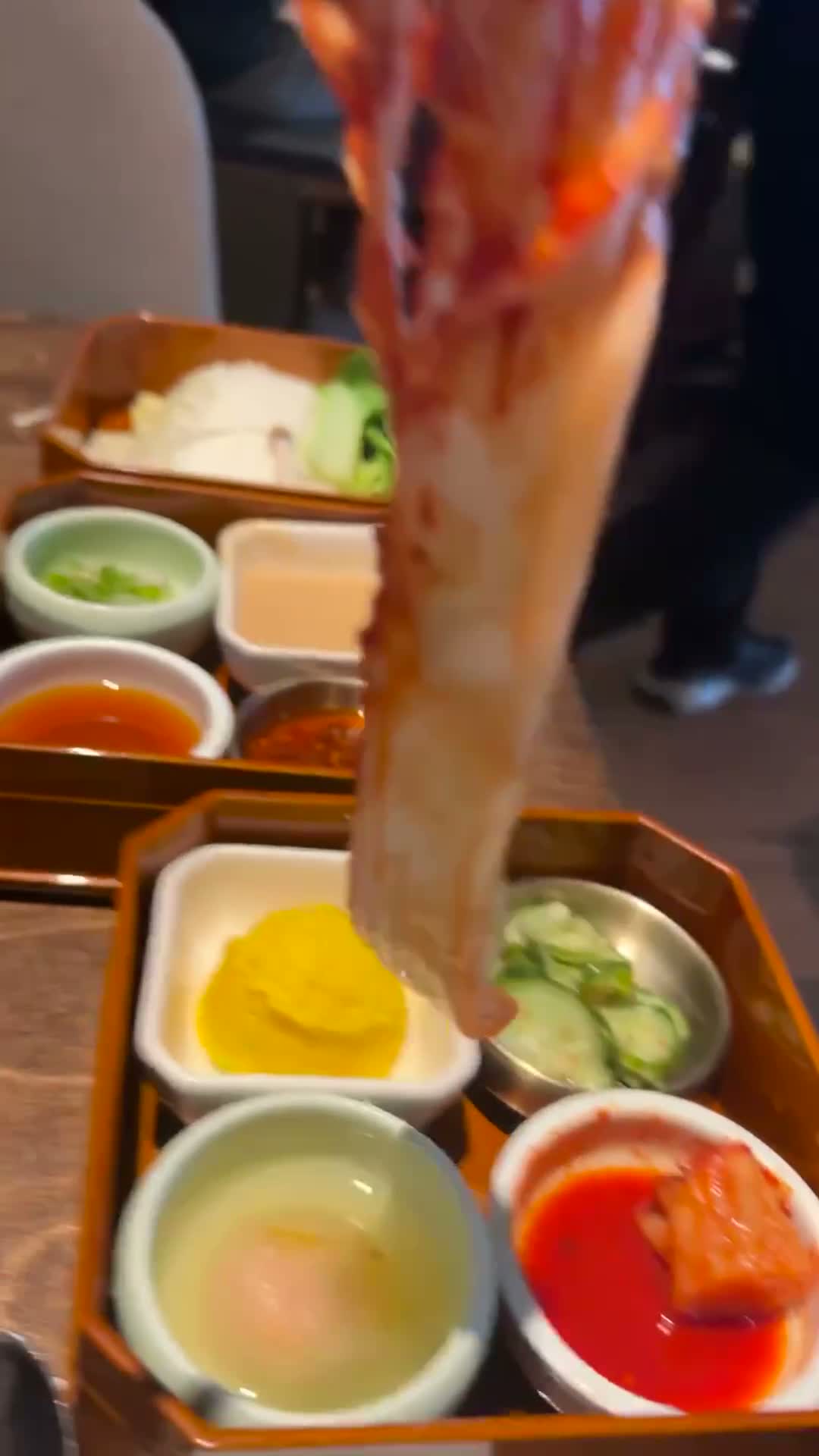
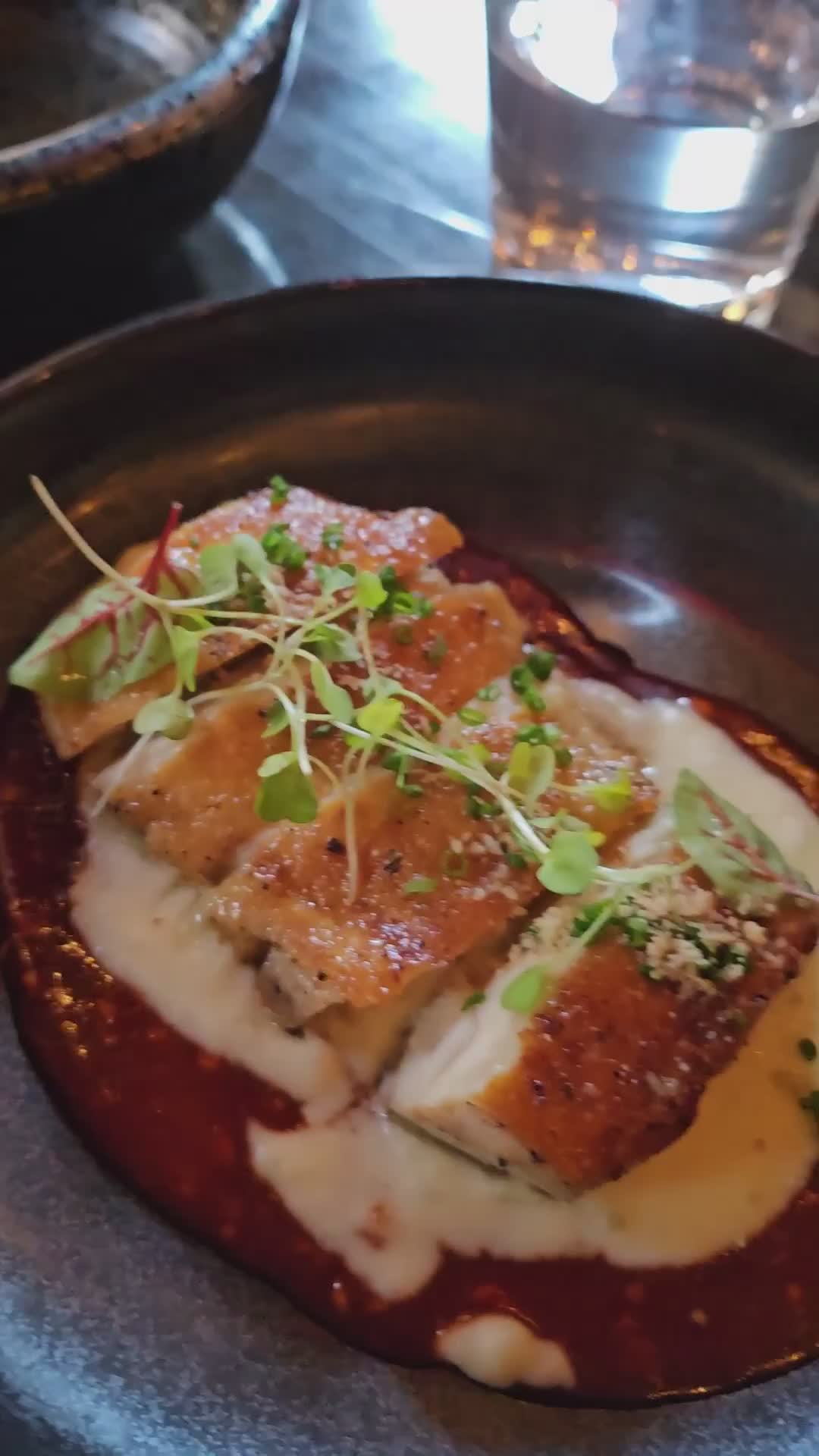
The pork belly bossam at Gurumé keeps its Korean logic and rearranges the furniture. The belly is braised and the radish is pickled, but the radish is cut into noodles, and the dwenjang, the fermented soybean paste that normally gives a stew its backbone, is turned into a crème. It is a small act of translation, and it sets the terms for the room: tradition is the starting point, never the limit. The restaurant calls its plates Korean tapas, which in practice means anju, the food Korean drinking tables are built around, cooked by a New Yorker for New York.
Joon Hyun Ryu runs the kitchen. He is a New York native with fifteen years of cooking behind him, and he aims to bring a touch of nostalgia through Korean-American dishes. Eater NY noted his time at Gansevoort Market and Barnjoo when it listed the restaurant among the openings of March 2024. Gurumé is his first venture with Kevin Chand, a longtime friend who shares ownership. The name means "in the clouds" in Korean, a small boast about ambition that the menu does its best to back up.
A Korean Pantry, Borrowed Widely
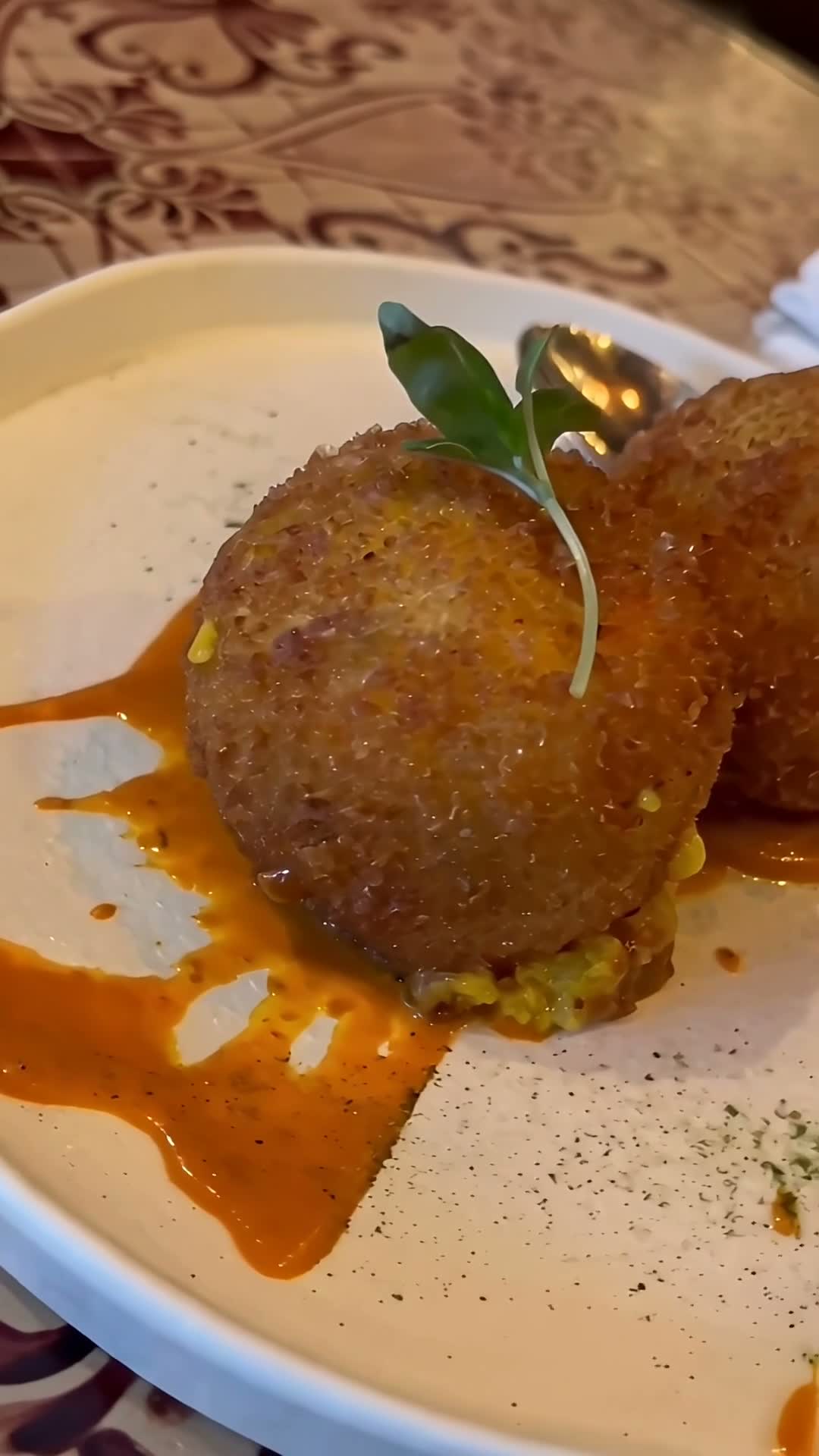
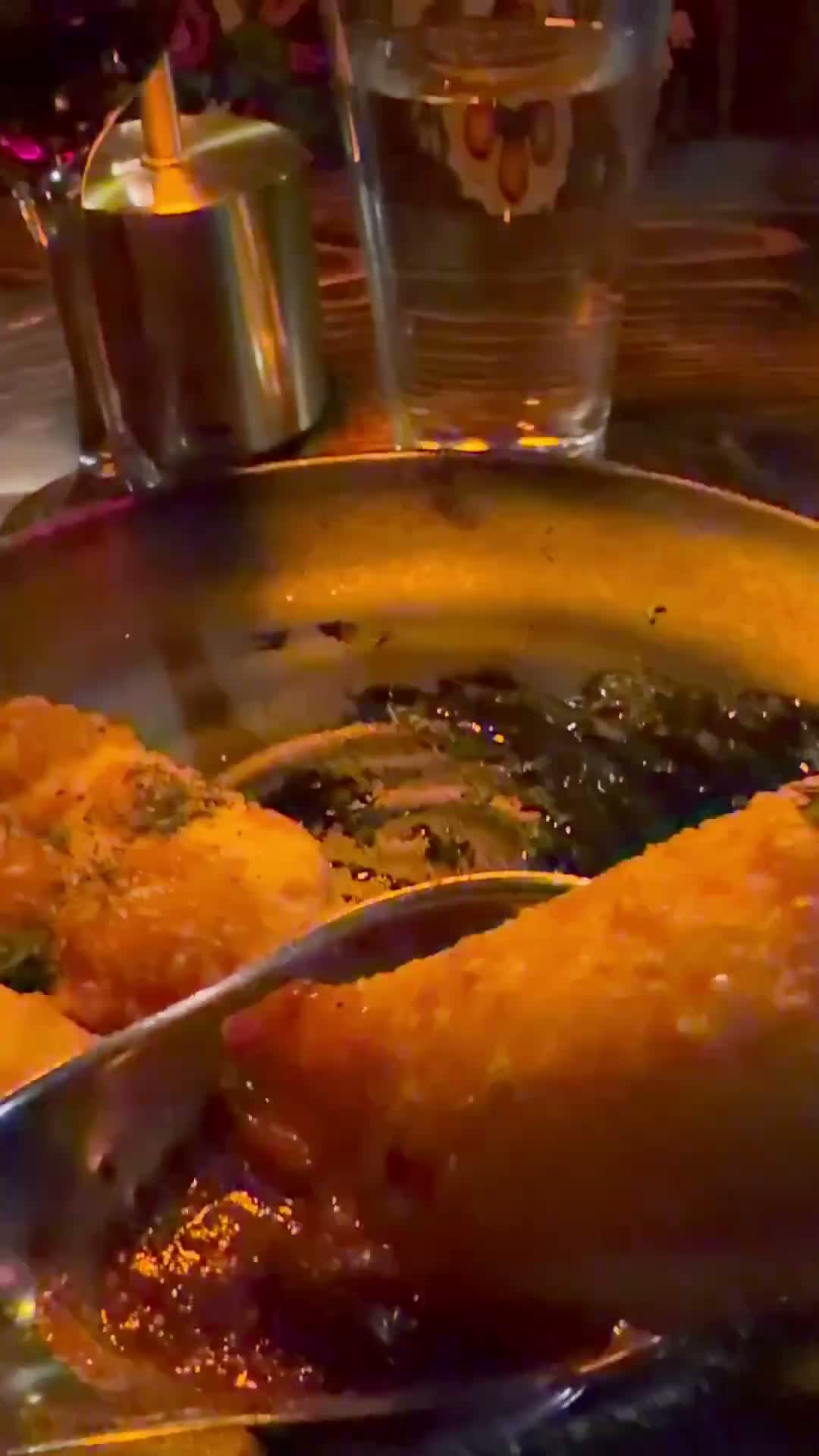
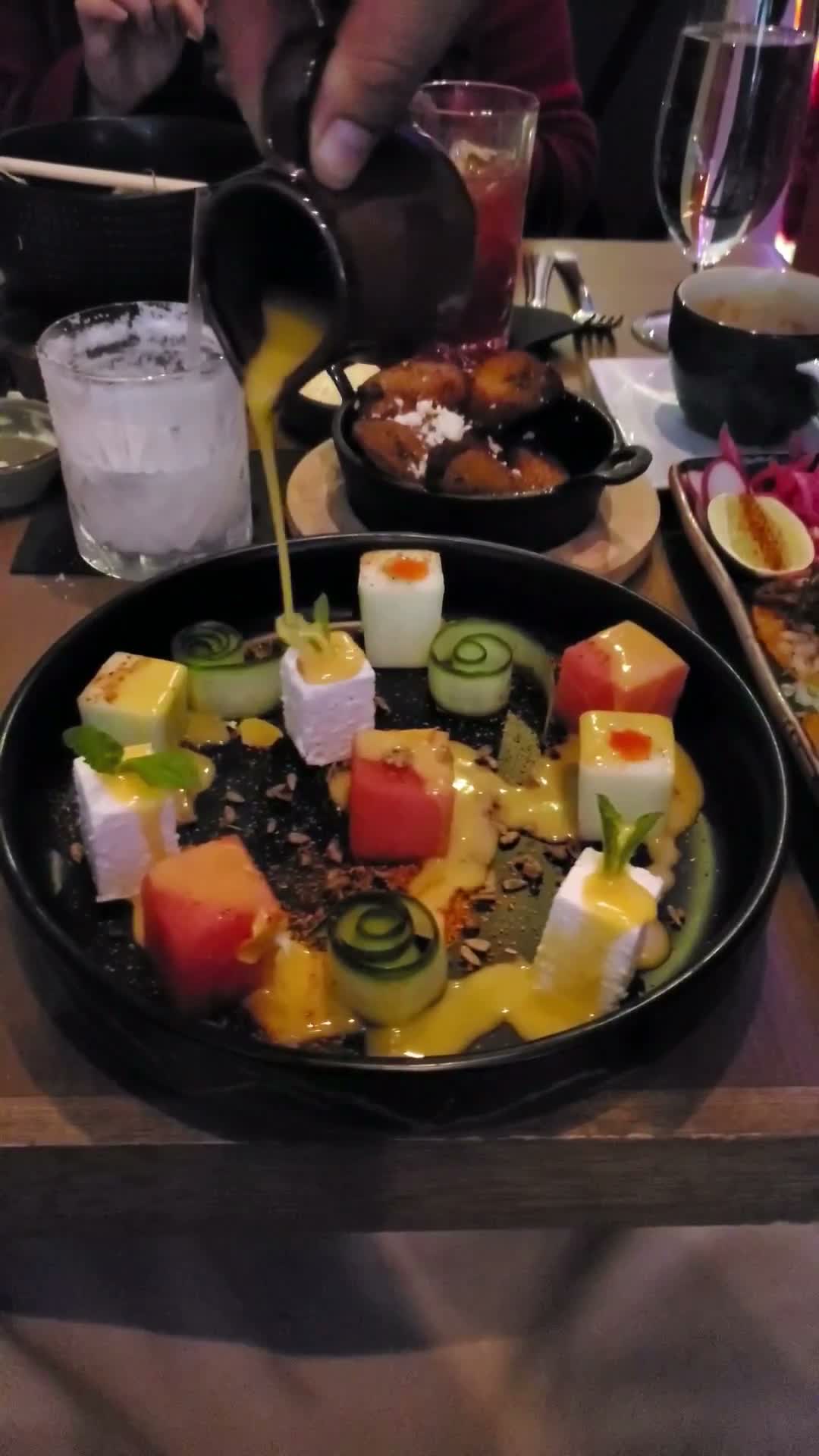
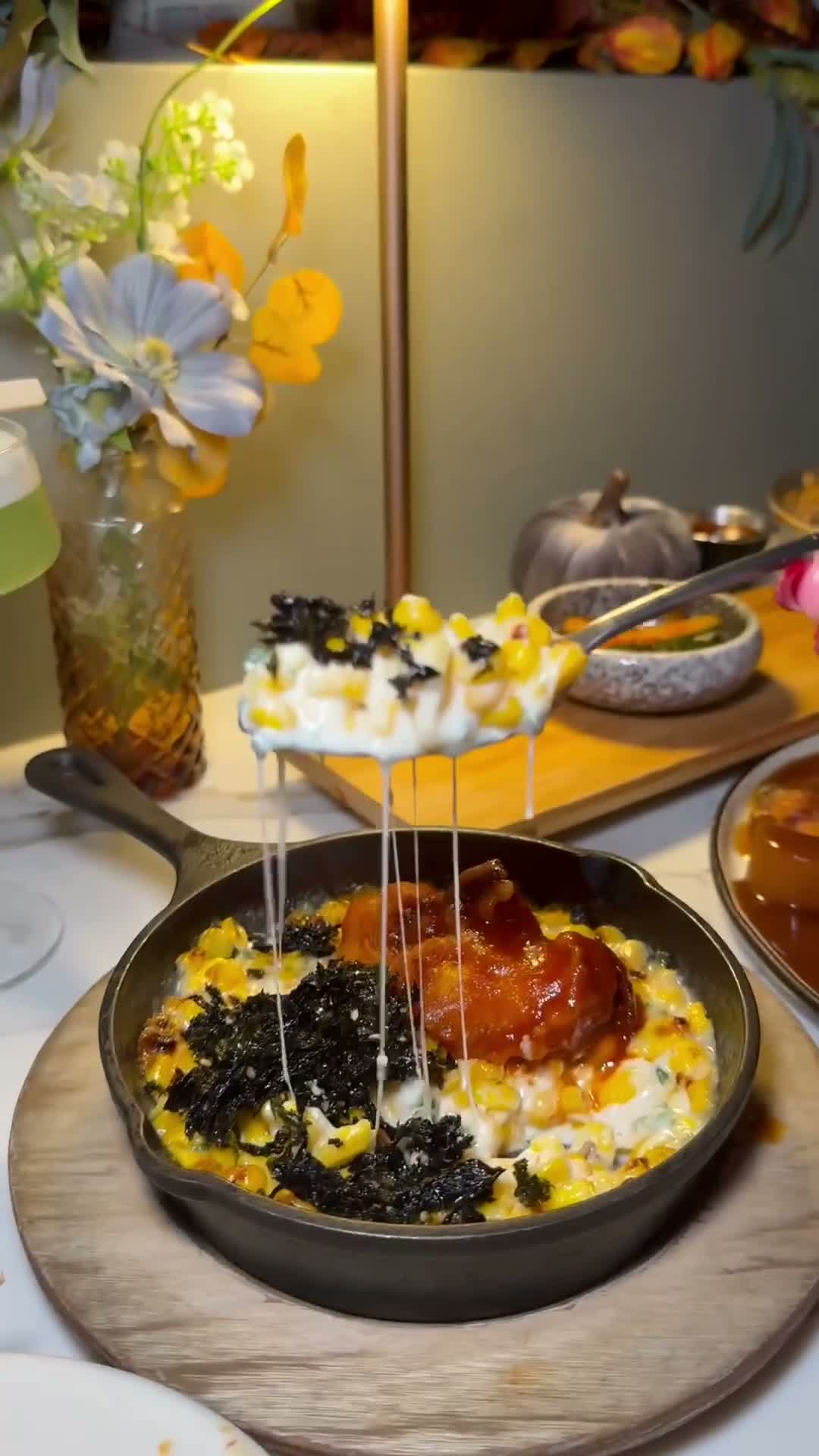
The cross-borrowing is the point, and the plates are open about it. Eater NY's roundup singled out the crispy corn, dressed with gochujang, cotija, cilantro and achiote, and the tempura oyster mushroom tacos with pico de gallo: a Korean chile paste sharing a bowl with Mexican cheese and annatto, a Korean-leaning kitchen frying a mushroom where a taco would usually carry meat. Birria mandu runs on the same idea, a Mexican braise inside a Korean dumpling. The footage Hidden Food filmed there lingers on the same register: a squeeze of lime over fish tacos, a seafood crudo finished with caviar.
It is a small act of translation, and it sets the terms for the room: tradition is the starting point, never the limit.
Rice Cakes, Rice Bowls, and Crunch
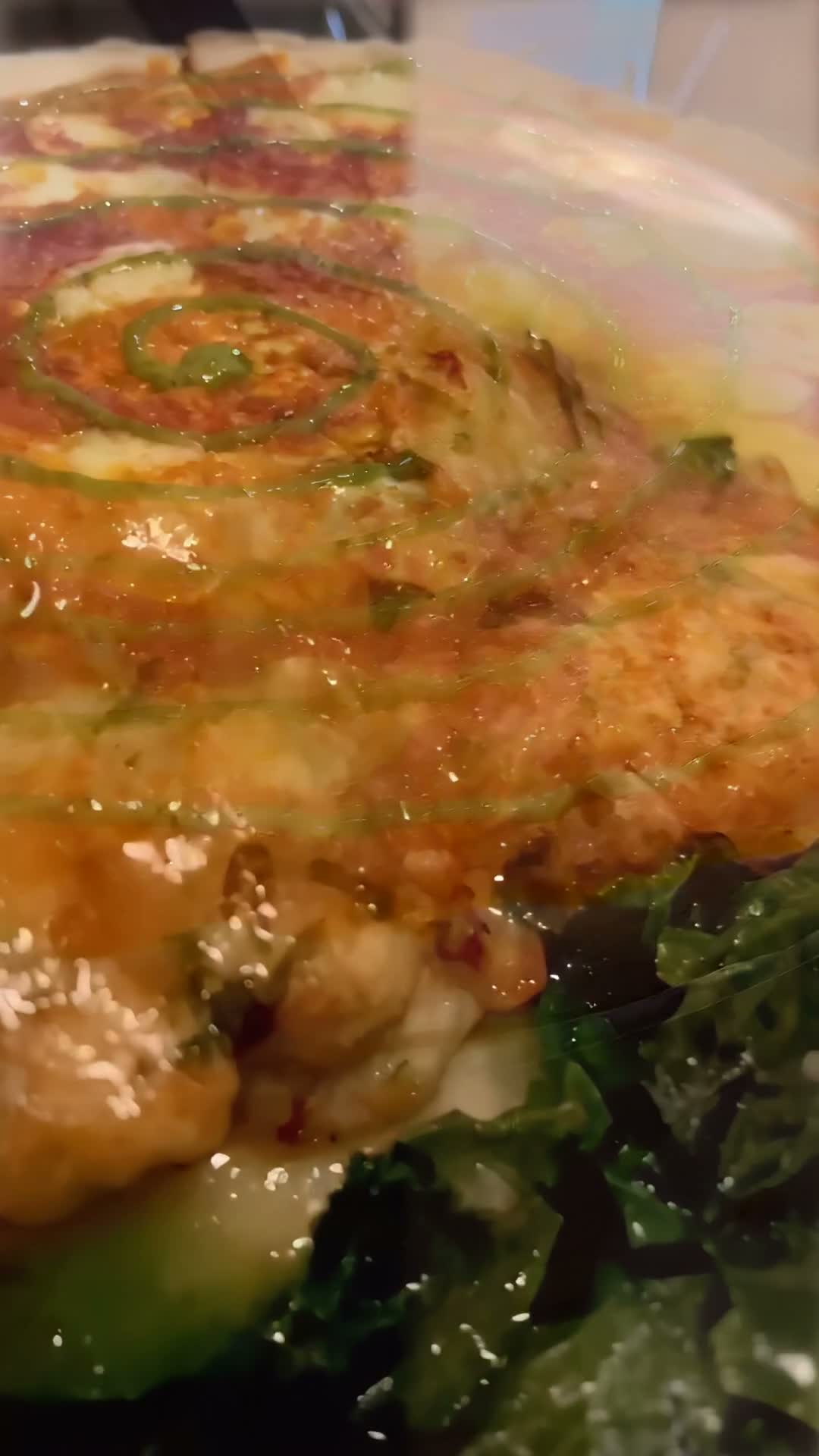
Crunchy quinoa turns up on the truffle dduk and cheese and again on the Berkshire kimchi fried rice, which suggests a kitchen that thinks about texture before it thinks about flavor. The dduk is Korean rice cake browned in butter, sauced with six cheeses and served with garlic crostini, a bar-snack answer to tteokbokki. The fried rice pairs Berkshire pork with caramelized kimchi, and the quinoa adds a dry crackle against the soft rice cake and the cheese.
The mushroom harvest bowl is the quieter argument. It combines seasonal mushrooms, a shoyu made with Korean pear, toasted rice and an onsen tamago, the slow-cooked egg that is meant to be broken. Hidden Food's video watches a spoon work an egg yolk into rice, then cuts to someone finishing a smaller bite by hand, which is how a table of shared plates tends to eat.
A Room With a Steakhouse Past
Gurumé sits on Restaurant Row in the former home of Broadway Joe's Steakhouse, in the Theater District, a block of long-running New York dining rooms it joined as a newcomer. The room is intimate rather than grand, and the bar matters: the cocktail list is built around soju elixirs, which suits food designed to be eaten alongside a drink. The menu turns over with the seasons. Dessert is a warm black sesame bread pudding with vanilla bean ice cream and raspberry powder. Start with the bossam, finish with the pudding, and let the soju fill the space between.
What the critics say
Eater NY included Gurumé in its March 2024 roundup of new restaurants, describing a Korean tapas bar by Joon Hyun Ryu serving fusion bar snacks such as crispy corn and oyster mushroom tacos.